

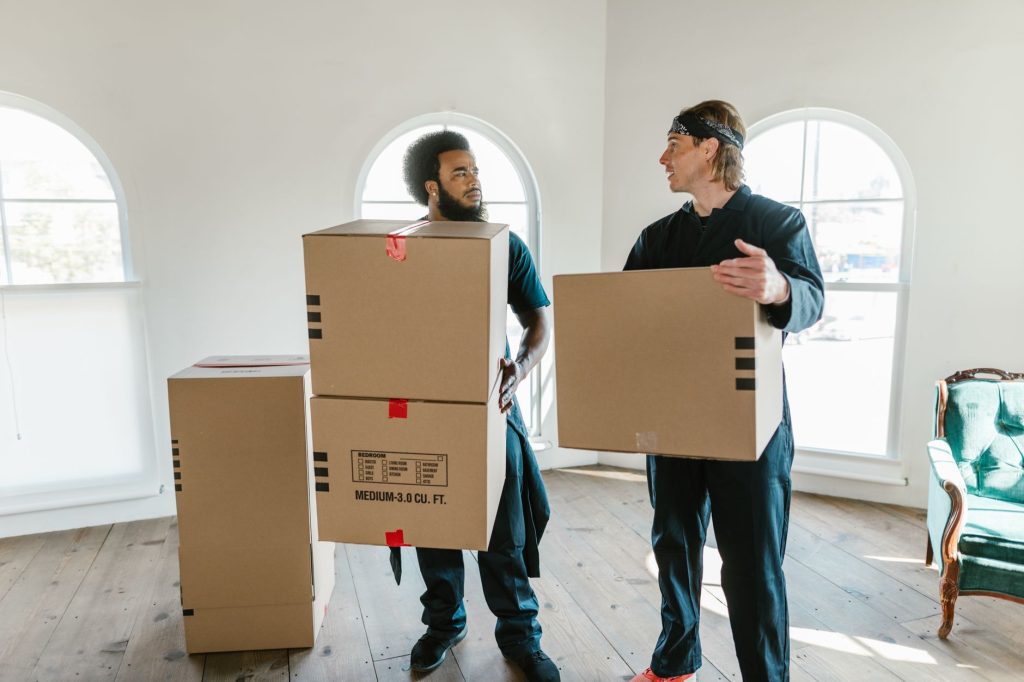
Most of a household move is boxes. Dishes, books, clothes, the contents of a dozen drawers — they all slide into cardboard and stack neatly on a truck. Then there’s the grandfather clock, the full tank of fish, and the treadmill that two people can barely nudge across the floor. These are the items that get left for last and cause the most trouble, and they deserve a plan of their own.
How do movers handle an antique that can’t be replaced?
An antique’s value isn’t just its resale price — it’s that there is no second one. A mover treats these differently from the start. Fragile joints get stabilized, loose veneer gets padded, and drawers and doors are either removed or secured so nothing swings open mid-transit. Rather than wrapping an old cabinet in a single blanket, a good crew builds around it: corner protection, multiple layers of padding, and sometimes a custom crate for anything genuinely irreplaceable.
The honest answer is that condition matters as much as handling. A century-old dresser that’s already cracked will move differently than a solid piece, and a reputable crew will tell you so before they lift it. In a city like London, Ontario, where plenty of homes hold inherited furniture, this conversation happens more often than people expect — and it’s worth having upfront so expectations match reality.
Can a full aquarium really come with you?
Not full, no — and that’s the first thing to understand. A populated tank cannot travel with water in it. The glass isn’t engineered to handle the weight of sloshing water on a moving truck, and the stress can crack a seam. The real work is in the staging: moving the fish into insulated, oxygenated containers, draining and transporting the tank empty, keeping the filter media damp so the beneficial bacteria survive, and reassembling everything at the other end before the fish are too stressed. It’s a genuinely delicate job with living things on the clock. If this is on your list, say so early — some crews coordinate it themselves and others will want you to handle the livestock while they move the empty tank and stand. Households sorting out who does what often compare notes on a lamb moving company before committing, precisely because specialty items like this don’t fit the standard quote.
Mirrors, glass tabletops, and framed art
Flat, fragile, and oddly heavy — this category breaks more than almost anything else because people underestimate it. A large mirror or glass tabletop should never travel flat on its back, where any flex or impact snaps it. It rides on edge, cushioned and supported, usually in a mirror carton or a telescoping box sized to fit. Framed artwork gets corner guards and a layer that keeps the glass from pressing against the canvas. For anything valuable or oversized, a crated solution is the safe route. The rule of thumb: the thinner and flatter the item, the more vertical support it needs.
Who deals with the treadmill and the weight rack?
Exercise equipment is the quiet problem of move day. A treadmill often needs folding, locking, and sometimes partial disassembly before it’ll clear a doorway, and the motor housing is heavier and more awkward than it looks. A loaded weight rack or a stack of plates can total several hundred pounds that has to be broken down, carried in manageable loads, and reassembled. This is where crews lean on the right straps and dollies rather than brute force. If you’ve got a home gym, flag it — it changes how many people and how much time the job needs.
What should you tell a lamb moving company about your odd items before move day?
Make a list of everything that isn’t going in a box: the piano, the tank, the antique armoire, the art, the gym, anything oversized or structurally fragile. For each one, note the rough dimensions, the weight if you know it, and whether it needs to come apart to leave the room. Mention tight staircases, narrow doorways, and anything that originally came into the house in pieces. The more a crew knows in advance, the less gets improvised on the day — and improvising around a one-of-a-kind item is exactly what you want to avoid.
The things that don’t fit in a box are usually the ones that matter most and get planned for least. Name them early, describe them honestly, and let the crew bring the right equipment. Do that, and the hardest part of the move becomes the part you worried about for no reason.